
T:+86-135-8672-6294
No. 1118-2, Wushan South Road, Yandun Village, Qiaotou Town Ningbo Zhejiang China

Views: 0 Author: Site Editor Publish Time: 2026-01-22 Origin: Site
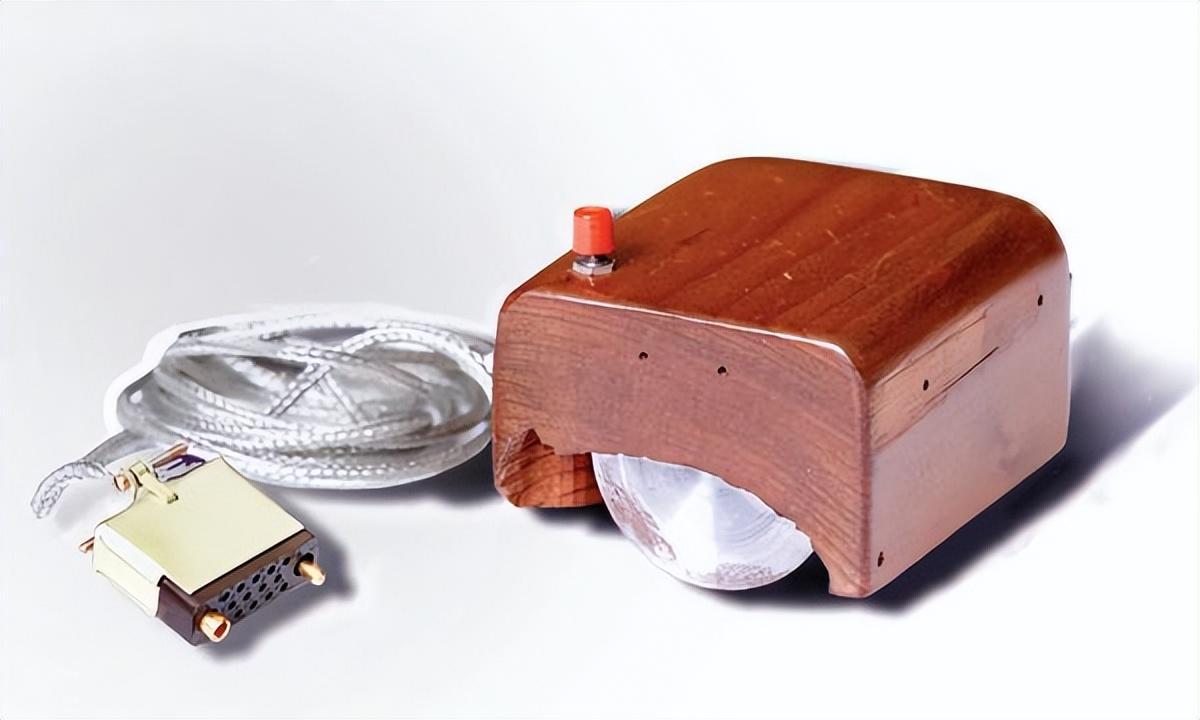
On December 9, 1968, at the ACM/IEEE Joint Computer Conference in San Francisco, USA, scientist Douglas Engelbart presented the prototype of the mouse he had invented in 1964. It had two wheels and a wooden casing, and could move horizontally and vertically. A small ball at the bottom drove a pivot to rotate, which in turn changed the resistance value of a potentiometer to generate displacement signals. After being processed by the computer, the cursor on the screen could be moved. This device, with its long cable trailing behind, resembled a mouse and was playfully called "Mouse" within the laboratory.
By the 1980s, mechanical mice appeared. They worked by having the rubber balls at the bottom drive the rotating shaft. However, dust and wear and tear could easily affect the positioning accuracy, and it wouldn't be long before they had to be disassembled for cleaning and maintenance.
The first function of the mouse pad has come into play - it reduces dust, making the operation smoother and more even.
The desktop is always different. Dust always appears. The smooth glass table will cause the ball to slip, while the rough wood-grain table will hinder the ball's rotation. Wanting the cursor to follow your hand is simply an impossible wish.
A mouse pad, on the other hand, can precisely fill in the depressions on the original desktop, reducing the resistance and lag when the ball rolls, and improving the positioning accuracy. To put it simply, this small pad also incidentally alleviates the problem of the ball getting dirty. Dust is less likely to adhere to the surface of the pad, and the frequency of cleaning the mouse can also be reduced somewhat.


The optical mouse calculates the movement trajectory by using the sensor to recognize the surface texture. The mouse pad, with its uniform and smooth texture, is precisely able to enable the optical and laser sensors to accurately capture each movement. This further improves the precision of the mouse movement.
At present, the e-sports industry is booming, and the role of mouse pads has become particularly important, as they can help e-sports players operate more effectively. The material of the current mouse pad has also been upgraded, and its application range has been expanded.

The mouse pad is not an "optional accessory", but a necessity that enables the mouse to perform at its best, extends its lifespan, and enhances the user experience. Especially for those who have precise operation requirements in office or gaming, a suitable mouse pad can significantly improve the overall experience.
If you want to know more details, please don't hesitate to come and consult us!


